Deltronic Crystal Industries, Inc.
(973) 361-2222
Lithium Niobate Q-Switch Elements
Applications:
- Laser range finders
- Target designation systems
- Q-switched YAG lasers
- Precision laser and photonics systems
Lithium Niobate Q-Switch Elements for Nd:YAG Laser Systems
Deltronic Crystal’s lithium niobate Q-switch elements are precision-engineered components designed for fast, voltage-controlled modulation of laser cavities. Leveraging the strong electro-optic (Pockels) effect of lithium niobate, these elements enable rapid switching with low drive voltage, high extinction ratio, and minimal optical loss.
The material’s high optical transmission and stable electro-optic response make it well suited for demanding laser systems where pulse timing, beam quality, and reliability are critical, including laser range finders, target designation systems, and Q-switched Nd:YAG platforms. Each crystal is grown, oriented, and processed to ensure optimal optical propagation and repeatable performance.
Super-polished optical faces, wavelength-specific anti-reflection coatings, and precisely applied electrodes preserve beam quality, reduce intracavity losses, and support uniform electric field distribution. The result is a ready-to-install Q-switch component that delivers clean pulse formation, high efficiency, and long operational lifetime. Custom sizes and geometries are available to match specific laser cavity and system requirements.
Key Benefits at a Glance
- Clear, undistorted laser beams for accurate targeting and measurement
- Fast, reliable laser switching for precise pulse control
- Minimal light loss for higher efficiency and stronger output
- Durable performance under high laser power
- Ready-to-install components with custom options available
Built for R&D. Proven for Production.
Technical Overview
Lithium niobate (LiNbO₃) Q-switch elements utilize the material’s strong linear electro-optic (Pockels) effect to enable fast, voltage-controlled modulation of intracavity laser losses. When an electric field is applied along the electro-optic axis, the refractive index changes proportionally, inducing a controllable phase retardation that alters the polarization state of the circulating laser beam. In combination with polarizing optics, this mechanism allows rapid switching between high-loss and low-loss cavity states, producing short, high-peak-power laser pulses with precise timing.
These Q-switch elements are particularly well suited for Nd:YAG laser platforms operating at 1064 nm, 532 nm, and harmonic wavelengths, due to lithium niobate’s strong electro-optic coefficients, low half-wave voltage (Vπ), and excellent optical transmission at YAG wavelengths. The low drive voltage requirement supports compact, efficient driver electronics while maintaining high extinction ratios and fast switching speeds.
To optimize performance in YAG-based systems, lithium niobate Q-switch elements are engineered with:
- Z-xis optical propagation, maximizing electro-optic interaction and minimizing required drive voltage
- Super-polished optical faces, preserving beam quality and reducing intracavity scattering
- Low-reflectance AR coatings at fundamental and harmonic YAG wavelengths, minimizing cavity losses
- Precisely applied electrodes, ensuring uniform electric field distribution, repeatable switching behavior, and stable pulse formation
These design and fabrication controls enable reliable generation of short, high-energy pulses with consistent temporal characteristics and long operational lifetimes. As a result, lithium niobate Q-switches are widely used in demanding applications such as range finding, target designation, micromachining, and scientific instrumentation, where pulse stability, efficiency, and durability are critical.
Technical Overview
Lithium niobate (LiNbO₃) Q-switch elements utilize the material’s strong linear electro-optic (Pockels) effect to enable fast, voltage-controlled modulation of intracavity laser losses. When an electric field is applied along the electro-optic axis, the refractive index changes proportionally, inducing a controllable phase retardation that alters the polarization state of the circulating laser beam. In combination with polarizing optics, this mechanism allows rapid switching between high-loss and low-loss cavity states, producing short, high-peak-power laser pulses with precise timing.
These Q-switch elements are particularly well suited for Nd:YAG laser platforms operating at 1064 nm, 532 nm, and harmonic wavelengths, due to lithium niobate’s strong electro-optic coefficients, low half-wave voltage (Vπ), and excellent optical transmission at YAG wavelengths. The low drive voltage requirement supports compact, efficient driver electronics while maintaining high extinction ratios and fast switching speeds.
To optimize performance in YAG-based systems, lithium niobate Q-switch elements are engineered with:
- Z-xis optical propagation, maximizing electro-optic interaction and minimizing required drive voltage
- Super-polished optical faces, preserving beam quality and reducing intracavity scattering
- Low-reflectance AR coatings at fundamental and harmonic YAG wavelengths, minimizing cavity losses
- Precisely applied electrodes, ensuring uniform electric field distribution, repeatable switching behavior, and stable pulse formation
These design and fabrication controls enable reliable generation of short, high-energy pulses with consistent temporal characteristics and long operational lifetimes. As a result, lithium niobate Q-switches are widely used in demanding applications such as range finding, target designation, micromachining, and scientific instrumentation, where pulse stability, efficiency, and durability are critical.
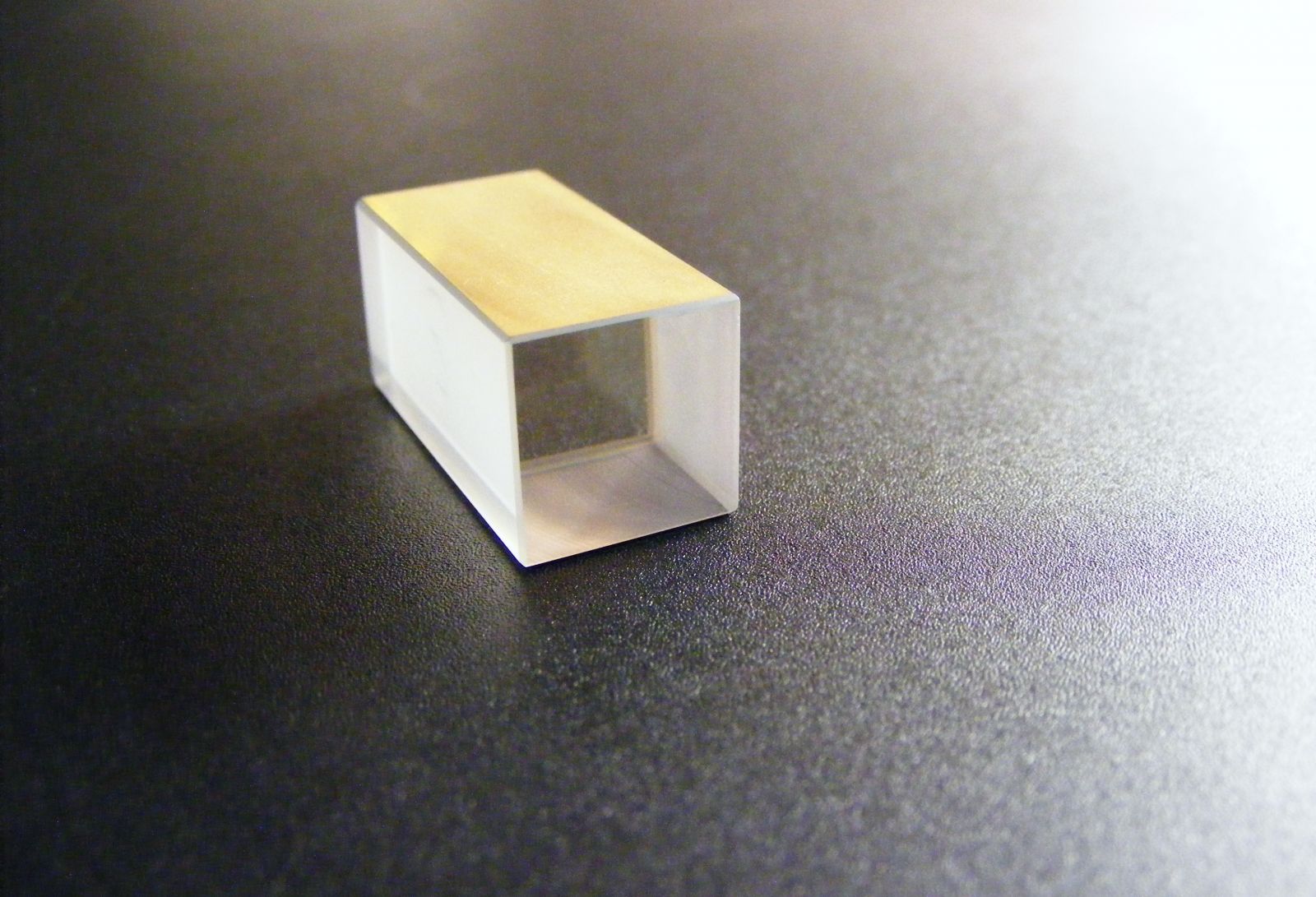
Specifications
Length (Z-Axis)
±0.5mm or specify
Cross-Section: X-Axis / Y-Axis
±0.1mm / ±0.1mm
Chamfer, all edges
0.4mm at 45° or specify
Optical faces, normal to Z-Axis
Within 10 arc minutes or specify
Lateral faces, normal to X & Y Axis
Within 10 arc minutes
Typical Laser Damage Threshold
≥ 300MW/cm2 at 1064nm
Optical Face
Polish
Flatness
Parallel
10-5 scratch-dig
λ/10 at 633nm
within 10 arc seconds
Anti-reflection coatings
Reflectance ≤ 0.2%
Surface Finish, lateral faces
Fineground
Electrodes
Au/Cr on X-faces
Extinction Ratio at 1064nm (passive)
≥ 26 dB
Transmitted Wavefront Distortion
λ/8 or better
Why Choose Deltronic Crystal Lithium Niobate Q-Switch Elements
At Deltronic Crystal, lithium niobate Q-switch elements are grown, oriented, cut, polished, electroded, and coated under tightly controlled processes to meet the optical, electrical, and reliability requirements of high-performance Nd:YAG laser systems.
Contact us to discuss specifications, custom requirements, or production volumes.
Call us at (973) 361-2222 or (973) 328-7000, or click here to contact us.