Iron-Doped Lithium Niobate
Applications:
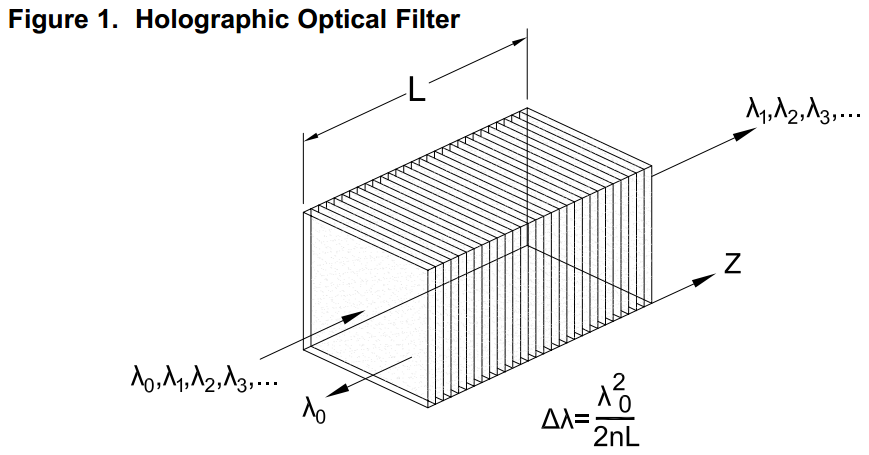
- Astronomical optical filters
- Spectroscopic filtering systems
- Holographic imaging and recording
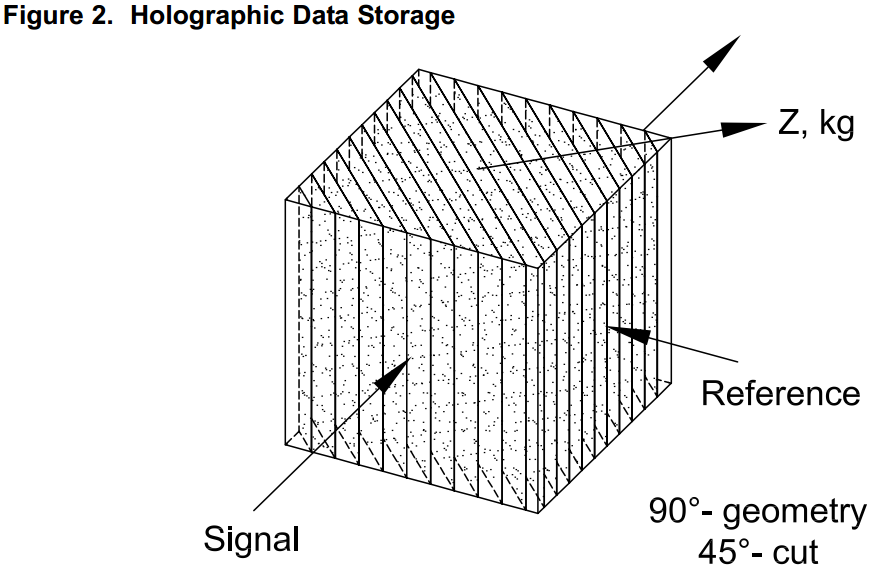
- Holographic data storage
- Wavelength division multiplexing (WDM) systems
High-Sensitivity Crystal for Holography and Advanced Optical Filtering
Iron-doped lithium niobate is a specially engineered crystal used in applications where light must be recorded, stored, or precisely filtered. Iron doping significantly increases the material’s photorefractive sensitivity, allowing it to accurately capture and manipulate light patterns. These properties make it well suited for holography, holographic data storage, optical filtering, and advanced spectroscopic systems.
At Deltronic Crystal, iron-doped lithium niobate is grown in large, high-quality crystal forms to support demanding optical applications in research, telecommunications, and scientific instrumentation. The material’s chemical stability and durability ensure reliable long-term performance in a wide range of operating environments.
Built for R&D. Proven for Production.
Technical Overview
Iron-doped lithium niobate (Fe:LiNbO₃) is a ferroelectric oxide crystal widely used in photorefractive and holographic applications due to its strong photovoltaic and electro-optic response. Iron doping introduces deep trap levels that significantly enhance photorefractive sensitivity and diffraction efficiency, enabling efficient hologram formation and light modulation.
During crystal processing, lithium niobate is electrically poled along the crystallographic Z-axis to align ferroelectric domains following its paraelectric-to-ferroelectric phase transition near 1143 °C. This controlled domain alignment is essential for achieving stable and predictable photorefractive performance.
Deltronic Crystal grows large-diameter iron-doped lithium niobate boules using the Czochralski method, ensuring uniform dopant distribution and high optical quality. The material’s chemical stability and resistance to common solvents support reliable, long-term operation in demanding optical systems.
Key Features and Benefits
- Strong photovoltaic effects for enhanced photorefractive response
- High electro-optic coefficients
- High photorefractive sensitivity
- High diffraction efficiency for holographic applications
- Grown using the Czochralski method for excellent crystal uniformity
- Chemically stable and non-reactive under normal operating conditions
Congruent Melt Composition
Congruent Melting Point (°C)
Thermal Expansion Coefficient (°C-1)
a = 16.7×10⁻⁶
c = 2.0 x 10⁻⁶
a = 5.1508 (hex)
c = 13.864 (hex)
Spontaneous Polarization (Coul/m2)
Refractive index, 514.5nm
Electro-optic Coefficients at 633nm [pm/V] (constant tension)
r13 = 9.6 r22 = 6.8
r33 = 30.9 r51 = 32.6 rc = 21.1
Crystallographic Orientations, Dimensions, and Tolerances
10x10x10mm3, 0° cut and 45° cut
10x10x20mm3, 0° cut and 45° cut
±0.1mm on polished faces
±0.1mm on lapped faces
X-ray oriented within ±10 arc-minutes
0.1 to 0.15mm chamfer at 45°
0.015, 0.03, 0.05, 0.10 mole%
Why Choose Iron-Doped Lithium Niobate?
Iron-doped lithium niobate remains one of the most widely used materials for photorefractive and holographic technologies. Its combination of sensitivity, stability, and optical performance makes it a trusted solution for advanced filtering, data storage, and light-modulation applications in both research and commercial environments.
Contact us to discuss specifications, custom requirements, or production volumes.